

Beyond Blame: How Empathy & Mediation Can Heal High-Conflict Families
Hey there, “My Companion” readers! Ever felt caught in the middle of a family disagreement that just wouldn’t end? You […]
Hey there, “My Companion” readers! Ever felt caught in the middle of a family disagreement that just wouldn’t end? You […]
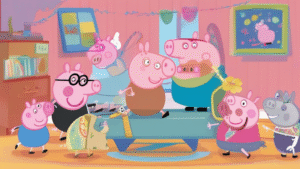
Okay, fellow young parents and Peppa Pig enthusiasts, gather ’round! There’s been a massive buzz in the world of muddy

Hey future and current parents! Ever wonder if those adorable early moments with your little one are doing more than

Parenting isn’t only what you say — it’s the silent messages you give every day. Long before children understand big ideas or complicated advice, they understand tone, touch, and presence. A hand on the shoulder during a tough moment. A smile after a small mistake. A calm voice when emotions are loud. These tiny signals become the emotional alphabet they carry for life.

The Hidden Truth Every Modern Parent Misses**
Parenting in 2025 looks simple from the outside — but inside every home, it’s a daily mix of pressure, emotion, rush, and expectation.
And the biggest mistake parents make today isn’t lack of love…
It’s lack of clarity.
Children don’t need perfect parents.
They need clear signals, consistent reactions, and connected conversations.
This becomes easier to understand when we compare how parenting used to be vs how it needs to be now.

In a world filled with constant noise — notifications, schedules, rushing — children are often heard but rarely listened to. Yet the moment a parent truly starts paying attention, something surprising happens: kids transform in ways most of us never expect. Their confidence rises, their behavior improves, and their emotional world opens up like a book finally being read.

Parenting today feels like a race no one remembers signing up for.
Homework, screen-time rules, tuitions, behaviour charts, schedules, routines—everything moves so fast that we often forget the simplest truth: children are not projects, they are people.
And somewhere between rushing them and correcting them, we stop noticing one question that quietly sits at the center of it all:
“Are we actually raising happy kids, or just busy ones?”

We teach our kids to say sorry — but rarely do it ourselves.
When parents apologize, it doesn’t show weakness; it shows respect and love. It teaches children that mistakes are part of being human, and what truly matters is how we fix them.
A simple “I’m sorry I shouted earlier” can rebuild trust faster than any lecture. It tells your child, “Your feelings matter to me.”

Parents are often expected to have all the answers — to be the walking encyclopedia of life, school, and emotions. But what if the most powerful thing you could ever say to your child isn’t an answer at all? What if it’s a simple, honest “I don’t know”?
In a world where everyone pretends to have it all figured out, this small phrase can teach one of life’s biggest lessons — that uncertainty isn’t weakness, it’s wisdom.

There’s a strange shift in parenting that no one warns us about.
Once, the house echoed with endless crying, constant demands, and dramatic meltdowns over a missing toy or an extra candy. Back then, we sighed and thought, “When they grow up, things will get easier.” We believed that once words replaced tears, parenting would finally feel peaceful.
But no one told us that silence can sometimes be louder than a tantrum.

Every parent dreams of raising a child who shares with joy, speaks gently, and cares for others naturally. But then reality hits — two kids, one toy, and a mini world war right in the living room. In that moment, most parents do what they’ve always heard: “Share it right now. Be a good kid.” But deep inside, a question lingers — are they sharing because they understand kindness, or just because they’re scared to say no?